Brian Cartwright, Global Supply Chain Solutions interviewed Ingo Kloepper, Global Managing Director at WeFreight
Brian Cartwright, Client Partner, Global Supply Chain Solutions, Pedersen & Partners, and a contributor for Global Supply Chain Magazine, recently had the opportunity to catch up with Ingo Kloepper, Global Managing Director, WeFreight.
In this interview, we hear Ingo’s perspective on the global supply chain considering the events of the past few years, and his thoughts on the future for the sector globally and the ongoing worldwide expansion of WeFreight. Ingo has been building WeFreight into a global freight forwarder with a focus on emerging markets since joining in 2021.
The growing e-commerce sector has revolutionised the logistics and forwarding industry in the Middle East. The rise of online shopping has created a demand for faster and more flexible logistics solutions, which has led to the development of new technologies and delivery models such as same-day delivery and last-mile delivery, affirms the Global Managing Director, WeFreight, a provider of a comprehensive logistics products and services, in an exclusive interview.
Global Supply Chain-Brian Cartwright (GSC): Can you tell us more about your career and experience in the Middle East?
Ingo Kloepper (IK): After starting my career as an apprentice freight forwarder in Germany in the early 1990s, I quickly progressed through various roles before joining DB Schenker. In 2007 I was given the opportunity to move the Middle East, which I did with no real expectation of how long I would be here.
After various roles in product management, I became head of Saudi Arabia in 2010, before taking on a regional ocean freight role in 2014. In mid-2015, I moved to Damco as head of the Middle East and joined WeFreight in 2021 in a global role as Global Managing Director.
GSC: What have been the main changes in the sector, since you moved to the Middle East?
IK: One of the most significant changes in the logistics industry has been the shift towards digitalisation and automation. In recent years, the industry has embraced new technologies such as blockchain, artificial intelligence, and the internet of things (IoT) to improve supply chain efficiency and transparency.
Infrastructure in the Middle East has undergone significant improvements, which has led to faster and more efficient transportation of goods. The region has witnessed the development of world-class seaports, airports, and road networks (with rail being planned), which have greatly enhanced the logistics and forwarding industry’s capabilities.
Finally, the growing e-commerce sector has revolutionised the logistics and forwarding industry in the Middle East. The rise of online shopping has created a demand for faster and more flexible logistics solutions, which has led to the development of new technologies and delivery models such as same-day delivery and last-mile delivery.
GSC: Can you tell us more about WeFreight and its focus?
IK: WeFreight is a fast-growing freight forwarder with a rapidly expanding global network. Our focus on digital innovation has enabled us to serve customers large and small with a full range of products and services, while our experienced teams are always ready to support customers.
However, what sets us apart is our unwavering commitment to being the agile logistics leader in emerging markets. We recognise the immense potential of these markets, and our goal is to leverage our expertise to unlock new opportunities for our customers.
GSC: What are the main challenges facing the logistics market in the Middle East in 2023?
IK: The logistics outlook for the Middle East in 2023 is largely uncertain, and many companies face supply chain challenges. Some of the key areas of interest include:
Increasing competition:
With the grip of the pandemic loosening, shoppers are flocking back to brick-and-mortar stores to savour the delights of being able to pick up, try on, and evaluate items first-hand rather than via online images.
For ecommerce retailers, this means facing competition from other retailers as well as traditional outlets. To stand out in a crowded marketplace, some ecommerce concerns are offering online discounts, special deals, exclusive goods, and big sales.
Focusing on customer demands:
In order to survive, retailers must provide what customers demand, and that goes for service as much as product. If customers want on-demand delivery, vendors must pull out all the stops to cater to the growing penchant for immediate gratification.
Meeting the requirement for end-to-end visibility in the supply chain:
While customers increasingly expect end-to-end visibility across their supply chains, the heavy investment needed by companies to achieve this goal means it is unlikely to become the norm any time soon.
Focus on Sustainability:
Companies that have not instituted a sustainability policy throughout their supply chains face being ignored in favour of those that have. Consumers increasingly support companies that demonstrate proactive concern about the impact of their operations on the environment.
Supply Chain Compliance:
This is possibly one of the most complex challenges facing emerging market forwarders. Unless companies are meticulous in ensuring compliance, they can face hefty fines or be taken to court.
GSC: What in your opinion is a major area that companies struggle with in their supply chains across the Middle East?
IK: As mentioned earlier, one major challenge is the lack of visibility and transparency in the supply chain. This is mainly due to the involvement of multiple stakeholders such as suppliers, transporters, and customs authorities, who may have different systems and processes for tracking and sharing information.
This lack of visibility can lead to delays, increased costs, and a higher risk of inventory shortages or overstocks. Additionally, the increasing demand for faster delivery times and customer expectations for real-time tracking and notifications further exacerbate this challenge.
GSC: What are the major challenges when moving goods into and across the Middle East?
IK: When it comes to moving goods across the Middle East, logistics companies and their customers need to consider several challenges. These include:
Border crossings:
The movement of goods across borders can be challenging due to customs clearance procedures, documentation requirements, and security checks. Delays at border crossings can result in significant disruptions to the supply chain.
Infrastructure limitations:
While the Middle East has made significant investments in infrastructure in recent years, there are still limitations in terms of road networks, ports, and airports. These limitations can result in congestion and delays in moving goods.
Political instability:
The geopolitical landscape in the Middle East can be volatile, and political instability can lead to disruptions in the supply chain.
GSC: What role does technology play in the logistics industry in the Middle East, and how is your company using technology to improve its services?
IK: Technology plays a significant role in the logistics industry in the Middle East, and WeFreight recognises the importance of using technology to improve our services. The region is known for its rapid adoption of new technologies, and this has led to an increasing demand for innovative logistics solutions.
We have invested heavily in technology to enhance our operations and improve our services. We use CargoWise across our global network to ensure standardisation and data quality, and we also use data analytics to gain insights into our operations and identify areas for improvement.






 “Having spent almost a decade within the search industry in Hong Kong, Vietnam and Singapore, Jonathan has been able to develop deep understanding of the markets and industry sectors to drive tangible value to clients. These capabilities will be invaluable as we continue to partner with our clients as they pursue their growth plans in the emerging markets within ASEAN. We are excited to welcome Jonathan to our ASEAN Team,” commented
  “I am very pleased to be joining Pedersen & Partners and to be part of the growth in ASEAN. With the firm’s global fully integrated platform, as well as the focus on emerging markets, I am confident that we will be able to provide unparalleled value to our clients within the emerging markets of ASEAN,” added Jonathan Whitehead, Client Partner at Pedersen & Partners.
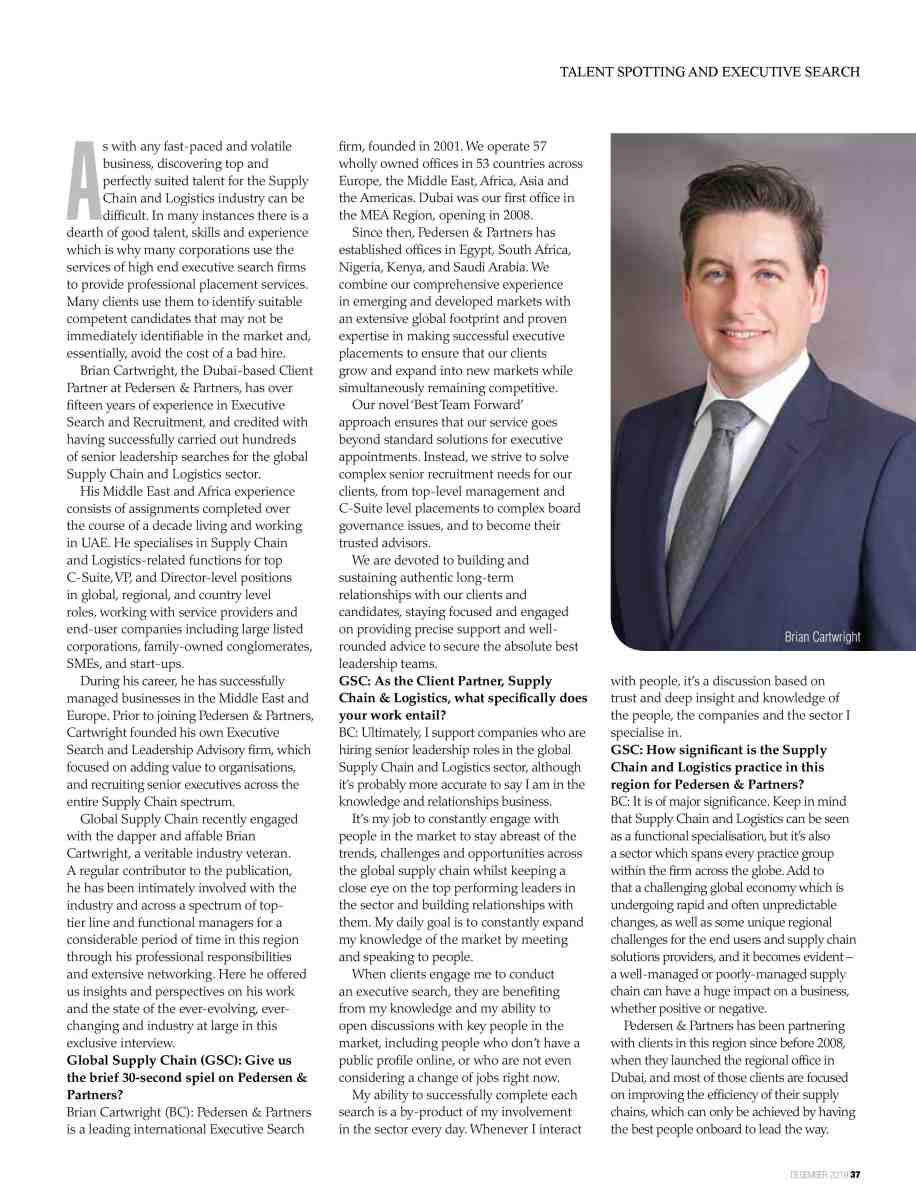
 As with any fast-paced and volatile business, discovering top and perfectly suited talent for the Supply Chain and Logistics industry can be difficult. In many instances, there is a dearth of good talent, skills and experience which is why many corporations use the services of high-end executive search firms to provide professional placement services. Many clients use them to identify suitable competent candidates that may not be immediately identifiable in the market and, essentially, avoid the cost of a bad hire.
 Global Supply Chain (GSC): Give us the brief 30-second spiel on Pedersen & Partners?
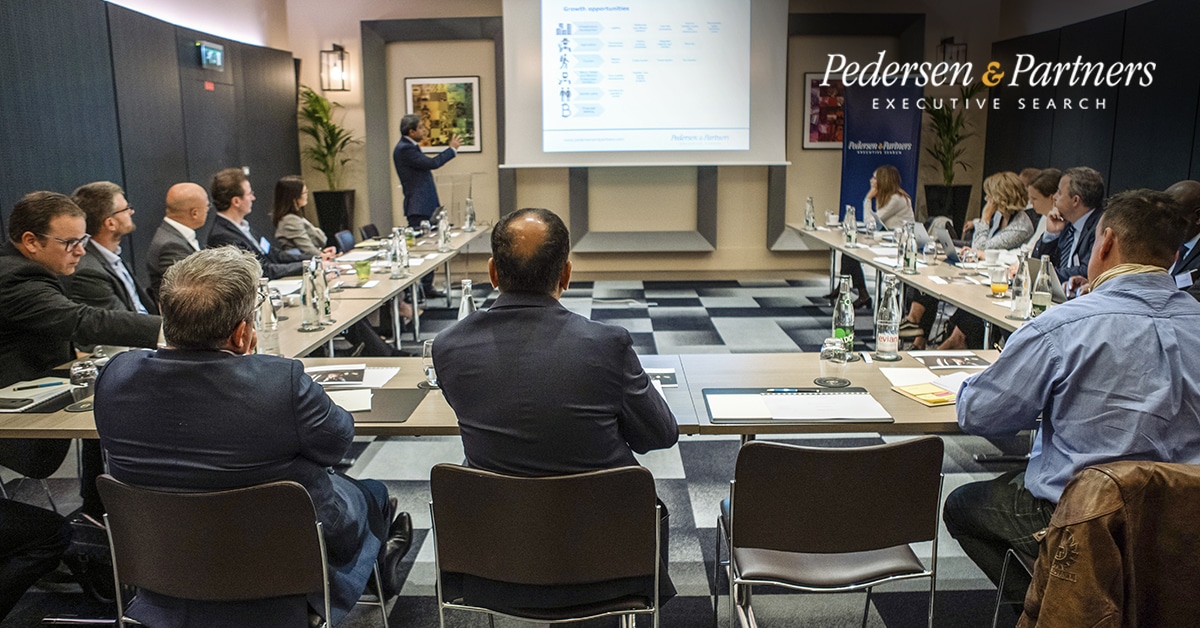
 Our novel ‘Best Team Forward’ approach ensures that our service goes beyond standard solutions for executive appointments. Instead, we strive to solve complex senior recruitment needs for our clients, from top-level management and C-Suite level placements to complex board governance issues, and to become their trusted advisors. We are devoted to building and sustaining authentic long-term relationships with our clients and candidates, staying focused and engaged on providing precise support and well-rounded advice to secure the absolute best leadership teams.
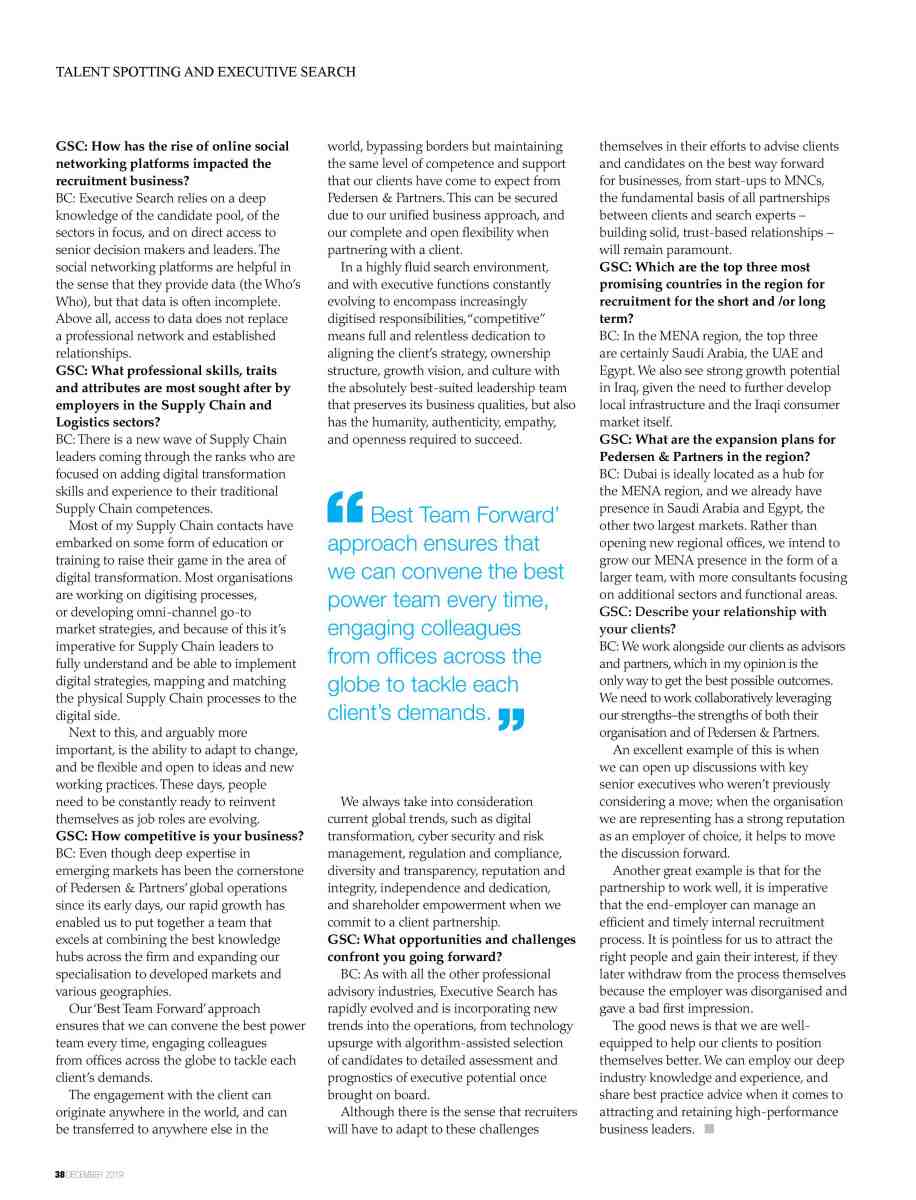 When clients engage me to conduct an executive search, they are benefiting from my knowledge and my ability to open discussions with key people in the market, including people who don’t have a public profile online, or who are not even considering a change of jobs right now. My ability to successfully complete each search is a by-product of my involvement in the sector every day. Whenever I interact with people, it’s a discussion based on trust and deep insight and knowledge of the people, the companies and the sector I specialise in.


 Avneesh Raghuvanshi
 Laurence Maheo
 “At Pedersen & Partners we strive to support our clients’ efforts to secure the best Supply Chain and Logistics leadership, allowing them to successfully grow and expand into new markets while simultaneously remaining competitive. Our “best team forward” approach will greatly benefit from Brian’s wide spectrum experience from corporations to start-ups, as he has completed mandates which ultimately signed on leaders who helped make Supply Chain & Logistics operations efficient, cost-effective, and fully integrated with Industry 4.0. systems,” stated
  “The value that we offer our clients in their search for top talent is partnering them with consultants that have both the understanding of the local market and client’s business. Henry brings a solid international experience in DACH and CEE regions, while Martina adds a decade of work in the Executive Search industry. I am confident that their expertise and strong track record will be beneficial both to our clients and colleagues across the world,” announced