
Key Takeaways from the 2nd East Africa Private Equity Breakfast in Nairobi
October 2026
Pedersen & Partners and CMS Kenya | Daly Inamdar Advocates co-hosted the 2nd East Africa Private Equity Breakfast in Nairobi.
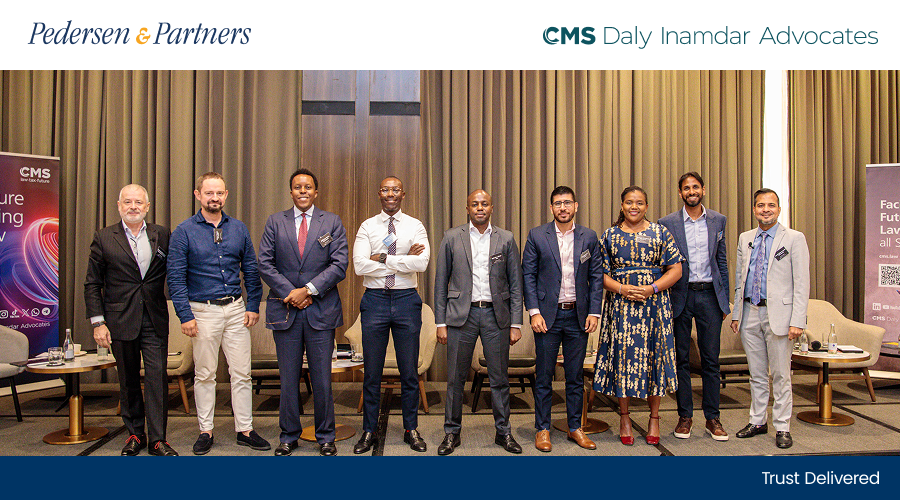
The event brought together private equity and investment leaders to discuss the evolving investment landscape, market dynamics, valuations, value creation and exit opportunities across East Africa.
The discussion was opened by co-hosts Michael Al-Nassir, Partner & Head of Private Equity APMEA, Pedersen & Partners, and Abdulhafeez Noorani, Partner, CMS Kenya | Daly Inamdar Advocates.
Panellists included:
- Vova (Vladimir) Dugin - Managing Partner, E3 Capital
- Muchiru Mark Kuria - Principal, Gaia Impact
- Michael Maina - Chief Strategic Consultant & Director, Shogun Advisory Services
- Ephraim Njogu - Senior Investment Manager, DEG
- Asif Noorani - Principal, Phatisa
- Karen Serem Waithaka - CEO, DOB Equity
- Arul Thomas - Partner, Lightrock
The key takeaways from the discussion were:
Outlook and Trends
- Nairobi remains the hub, but it is under pressure: Infrastructure, talent and a strong multinational ecosystem keep it ahead, while unpredictable tax policy, such as the new indirect share transfer rules, and competition from Kigali and Addis Ababa add friction.
- DFIs still dominate: They often provide 60–70% of fund commitments, but new commercial capital is emerging from the Middle East and Asia.
- Local pension capital remains untapped: Treasury yields of 15–18% set a high bar; unlocking it needs transparency, stewardship and direct engagement with allocators.
- AI has moved from hype to practice: It is used to streamline operations, pricing and credit scoring rather than to build standalone models.
Valuations
- Returns are made on entry: Valuations have tempered from the 2020–22 peaks, with regional multiples around 6–8x EBITDA.
- Flexible structures bridge valuation gaps: Earn-outs, convertibles and performance-based warrants protect investors while founders prove traction.
- Match the capital to the business: Venture-style funding does not suit asset-heavy or low-margin models.
- Advisers help, but incentives matter: Success-fee models can inflate founders’ valuation expectations.
Value Creation
- Human capital is the biggest lever: Upgrade leadership in step with growth rather than over-hiring early.
- Governance from day one: Early board, reporting and financial-control discipline de-risks follow-on funding and builds institutional readiness.
- ESG drives value: It improves bankability and resilience and widens the pool of international buyers.
- AI sharpens operations: Data analytics is making portfolio management sharper and cheaper.
Exits
- Liquidity is the main constraint: It is driving longer holding periods and slower distributions to LPs.
- Trade buyers lead: Strategic acquisitions remain the most viable exit route, ahead of secondaries.
- IPOs are selective: Listings have worked in North Africa on the back of local institutional demand, and recent East African listings show potential.
- Build businesses that are “bought, not sold”: Plan for the exit from the moment of entry.
We thank all speakers and participants who joined and contributed to the exchange.
Download the original in PDF: