
Evita Lune on Fintech Leadership in 2030: What Will Matter Most?
September 2026
Evita Lune, Equity Partner and Global Head of FinTech Practice at Pedersen & Partners, shared her perspective on the capabilities that will define fintech leadership in the years ahead during the Silk Road Finance & Technology Forum 2026 in Tashkent.
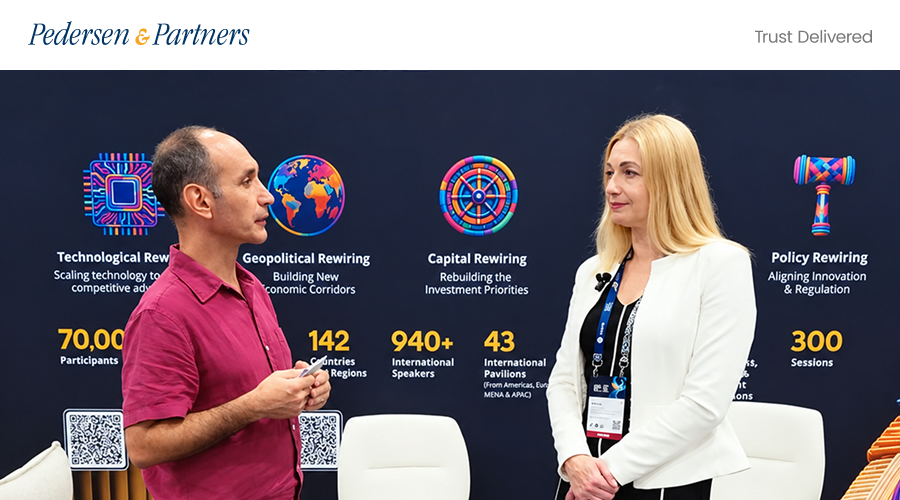
As fintech continues to evolve across markets, leadership requirements are becoming broader and more complex. Technical understanding remains important, but senior executives increasingly need to combine it with regulatory awareness, cross-cultural intelligence and the ability to operate effectively in an environment of constant change.
One of the most significant shifts is the growing importance of AI and big data at management level. These capabilities are no longer relevant only to technology teams. CEOs, CFOs, CTOs, Chief Risk Officers and other senior leaders increasingly need to understand how AI and data influence decision-making, operations, risk and business models.
For companies expanding internationally, regulatory awareness is equally critical. Lending, payments, banking, digital assets and other fintech activities are governed differently across markets, and the requirements in Europe can differ substantially from those in the United States, Asia or Central Asia. Leadership teams therefore need to understand not only where opportunities exist, but also how regulatory environments can affect the way those opportunities are pursued.
Cross-cultural awareness is another important part of international growth. Establishing relationships and conducting business in Central Asia, Turkey or Europe can involve very different expectations around communication, decision-making, pace and business etiquette. Market intelligence can provide valuable context, but direct interaction remains essential for understanding the nuances that influence successful cooperation.
Evita also highlighted the role fintech has traditionally played in moving ahead of established frameworks. New products and business models have often emerged before regulation was fully prepared for them, from peer-to-peer platforms and digital wealth solutions to new approaches in payments and digital assets. In many cases, innovation has required regulators and markets to adapt.
This willingness to experiment and challenge established models has long been part of the fintech community. It has also created a leadership culture that is generally more open to change and more accustomed to working with uncertainty.
Looking towards 2030, adaptability may become one of the most important leadership capabilities of all.
Technology, geopolitics, climate, regulation, international trade and market conditions are evolving simultaneously, making it increasingly difficult for leaders to rely on experience alone. Approaches that worked five or ten years ago may no longer provide an adequate guide for future decisions.
For fintech leaders, this means continuously reassessing assumptions, learning quickly and being prepared to adjust both strategy and leadership approach as conditions change.
As Evita Lune noted, the defining quality of the successful fintech leader of 2030 will be the ability to navigate both the organisation and themselves through an environment of unpredictability.
Watch the full conversation with Evita Lune:
What Will Define the Fintech Leader of 2030? | Evita Lune, Pedersen & Partners